Since SAP Cloud ALM (Application Lifecycle Management) is available free of charge to cloud customers with an Enterprise Support contract, we at adesso orange also decided to use it for our project management. After my initial training phase and the initial difficulties of not fully utilizing all the functions, I delved deeper into the tool. The more I learned, the more great features I discovered that SAP Cloud ALM offers for project management. In this post, I would like to share my experiences and use examples to show how helpful the tool can be.
Project members face challenges
In my daily work as a project team member, I frequently encounter the challenges of maintaining an overview in complex projects. The large number of stakeholders, constantly changing requirements, and the need to transparently document progress and risks present a continuous challenge. Furthermore, it can sometimes happen that not all participants have the same information, leading to misunderstandings. An uncoordinated distribution of information across different lists or systems exacerbates this problem. To optimize collaboration and increase efficiency, it is crucial to find solutions that support all team members and simplify project management.
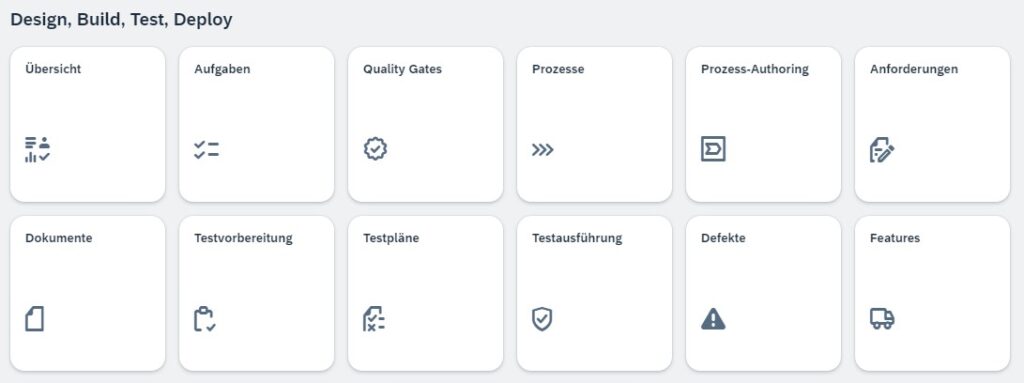
Key features of SAP Cloud ALM at a glance
When I first used SAP Cloud ALM, I was impressed by the central platform, which presents everything in a structured and clear format. I would like to briefly describe the most important functions in general terms.
Central planning and organization
The ability to view all projects and milestones in one place can significantly reduce time and improve coordination. Clear structures are particularly advantageous in projects with many participants.
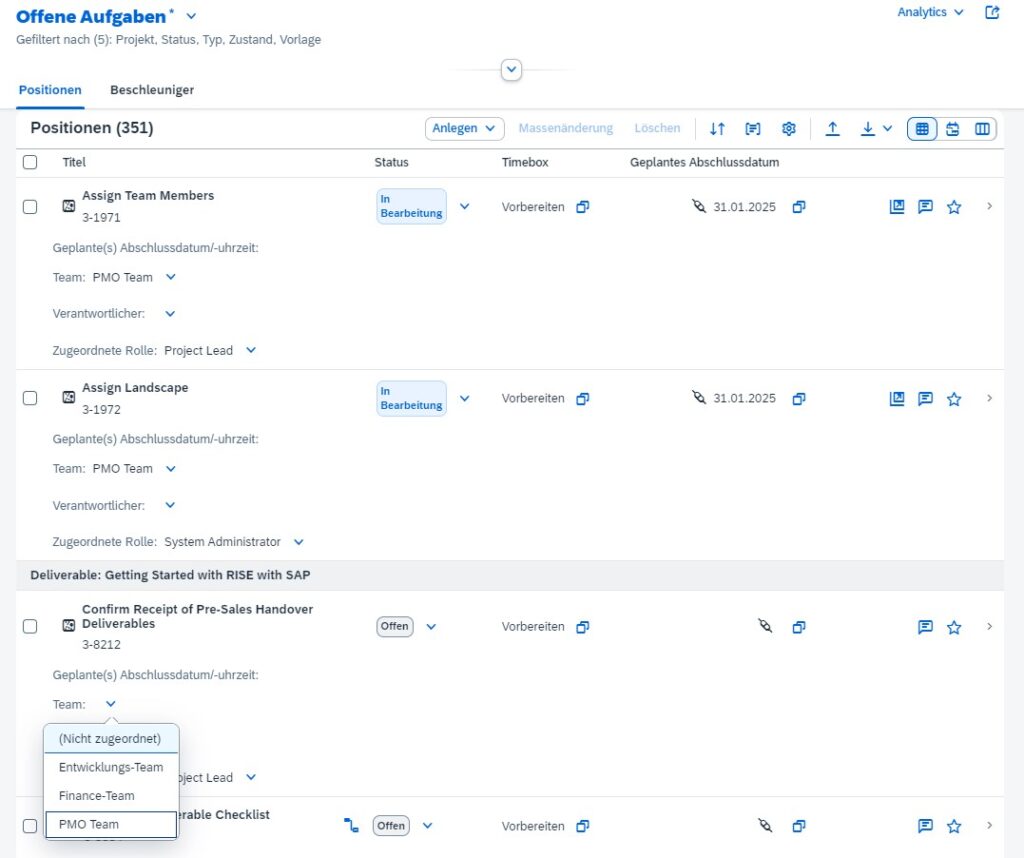
Automated task distribution
Es ist ein großer Vorteil, dass Aufgaben automatisch den richtigen Rollen zugeordnet werden. Dies sorgt dafür, dass jede Aufgabe von den Personen mit der passenden Rolle im Team bearbeitet werden kann, ohne dass wir manuell Verantwortlichkeiten zuweisen müssen. Mit nur einem Klick lässt sich das Team dann noch genauer spezifizieren. Durch diese klare Rollenverteilung ist die Aufgabenorganisation effizienter und transparenter.
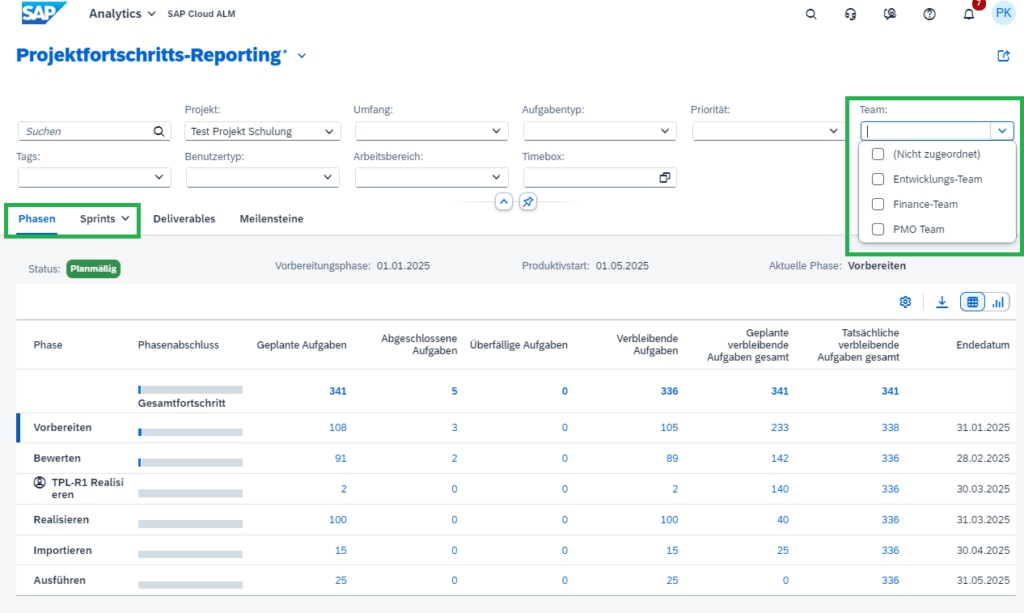
Transparency and traceability
SAP Cloud ALM provides a central overview at all times of who is working on which tasks and how far along they are. This keeps all information consolidated and traceable, preventing misunderstandings and information gaps, and significantly simplifying team collaboration.
For me, particularly useful features
What are some specific applications of SAP Cloud ALM that support project management? Below, I present some functionalities that are particularly helpful in my daily project work.
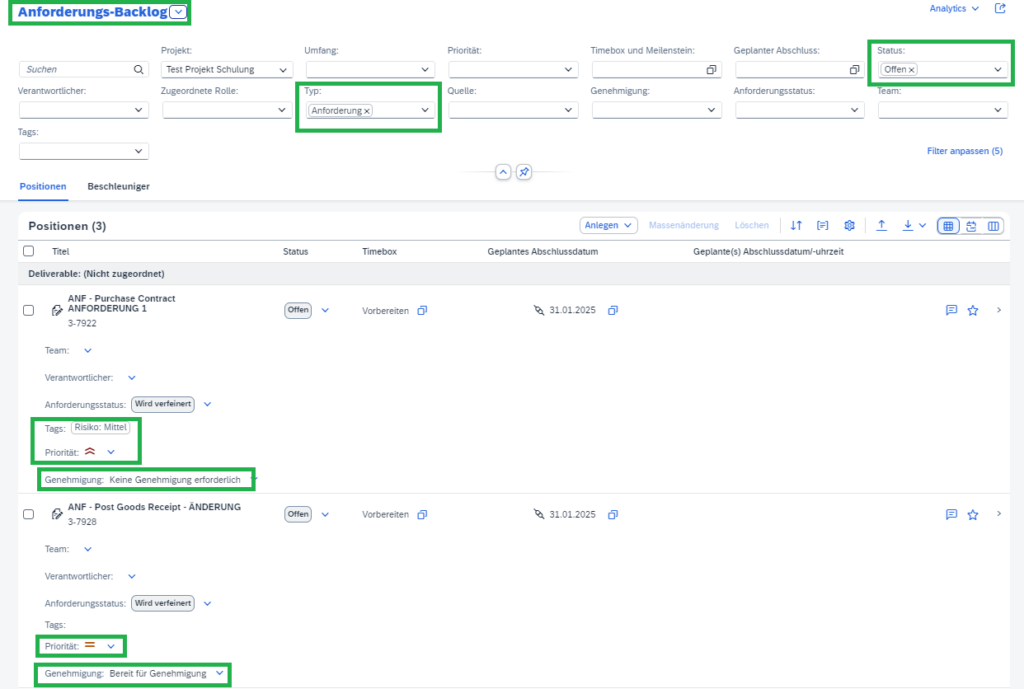
Requirements backlog and confirmed requirements backlog
SAP Cloud ALM enables the creation of a structured requirements backlog where all requirements are centrally collected. After an initial review and prioritization, requirements can be moved to a confirmed requirements backlog once they have been internally approved. This maintains an overview and makes it clear which requirements have been approved for the next steps.
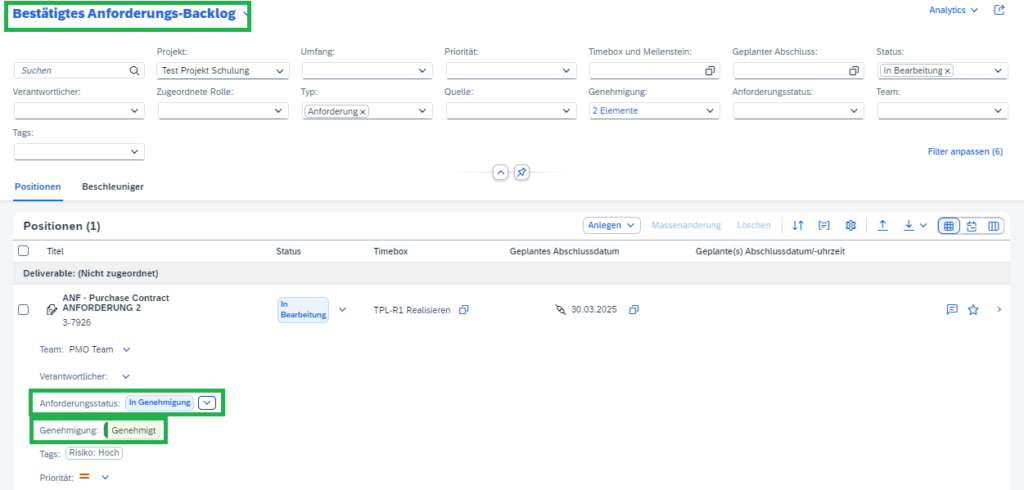
Product backlog and sprint backlog
After approval, the requirements are specified in user stories and added to the product backlog. There, they can be planned in more detail and integrated into the development process. In the next step, the user stories can be moved to the sprint backlog to define tasks for upcoming sprints and precisely coordinate their implementation. These backlog overviews create a clear structure and enable efficient prioritization of work packages and better planning of project progress.
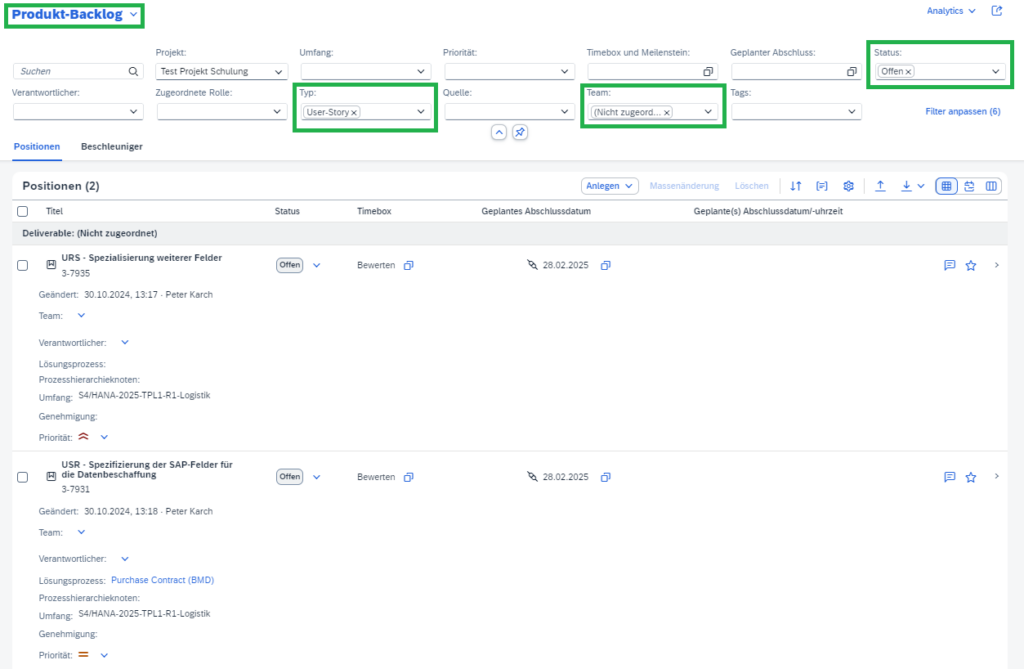
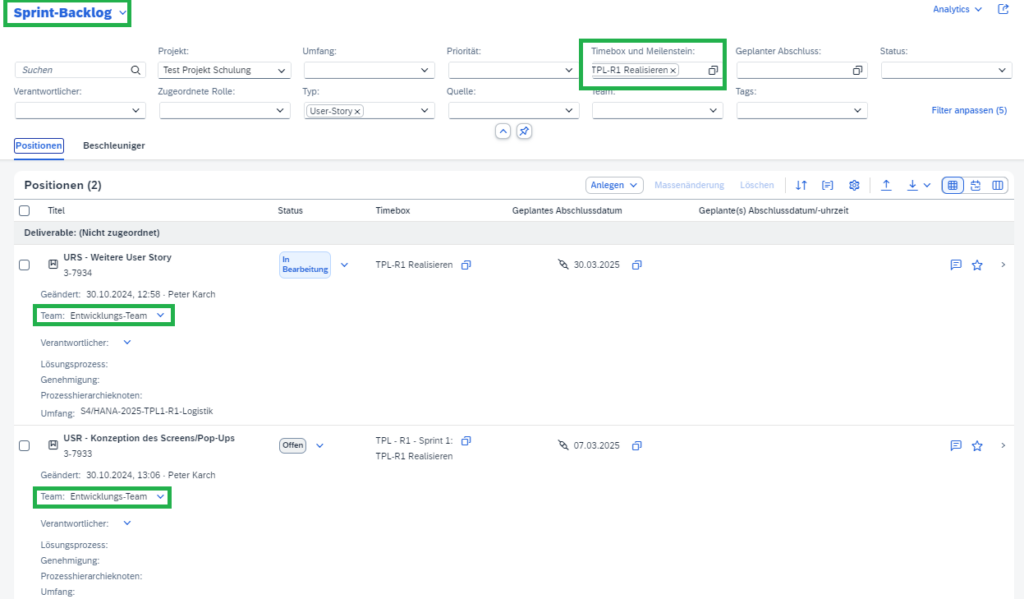
Requirements traceability including testing
SAP Cloud ALM enables comprehensive requirements traceability across all project phases – from elicitation and implementation to final testing. Each requirement can be tracked step by step to ensure it is correctly implemented and tested before being deployed to production. This seamless traceability improves quality assurance and provides the team and stakeholders with a high degree of transparency.
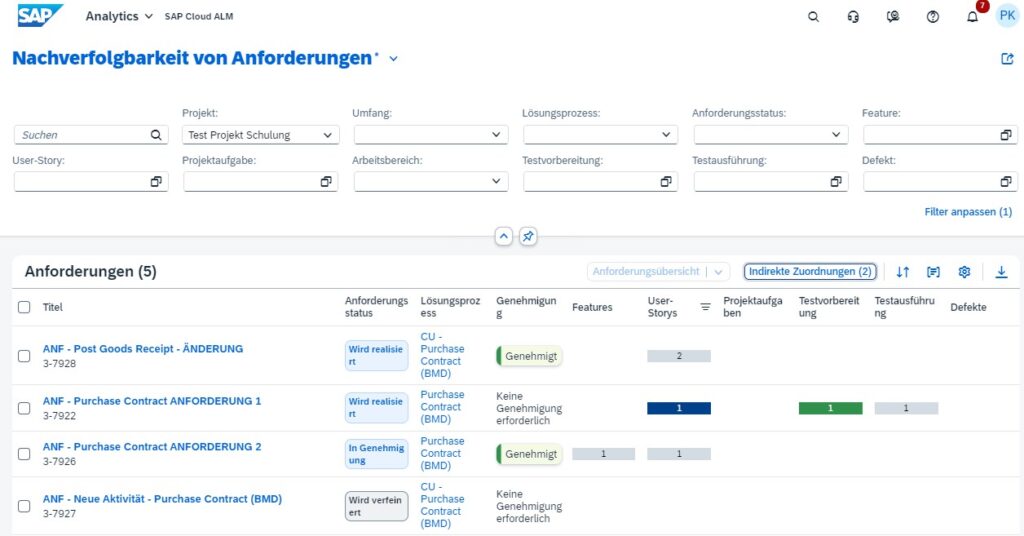
Defect management with SAP Cloud ALM
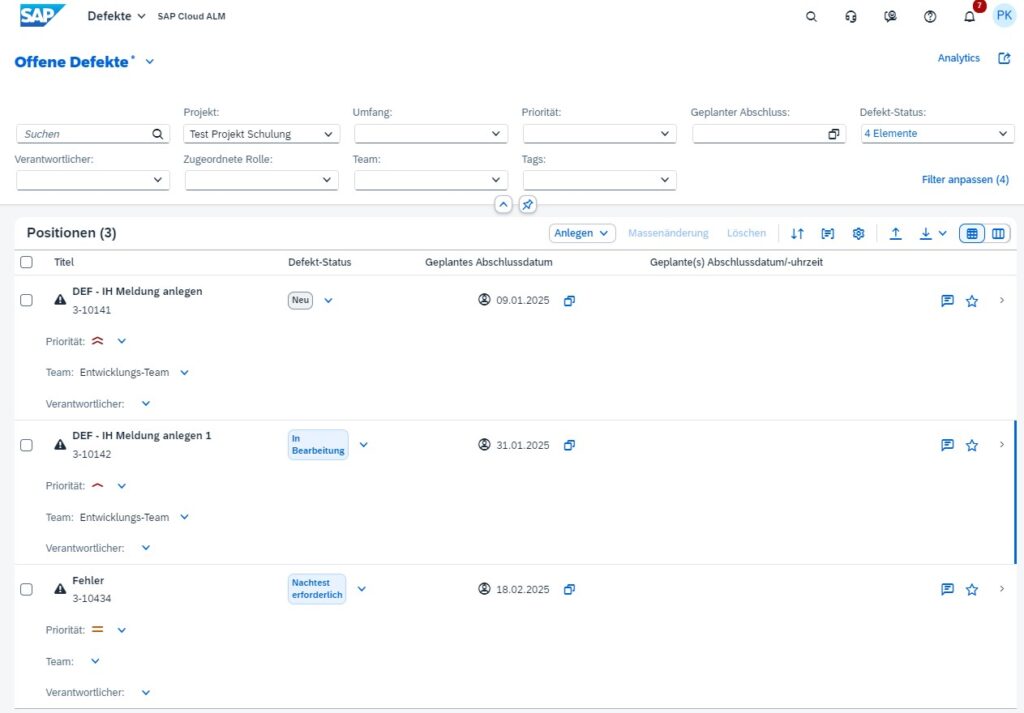
Effective defect management is crucial for project success. SAP Cloud ALM provides centralized defect documentation, creating transparency regarding the current status of problem resolution. This allows project teams to quickly identify which defects require prioritization. The close integration of defect management and various backlogs enables seamless integration of defect resolution into the development process. This ensures that critical errors are addressed promptly and the quality of the final product is continuously maintained.
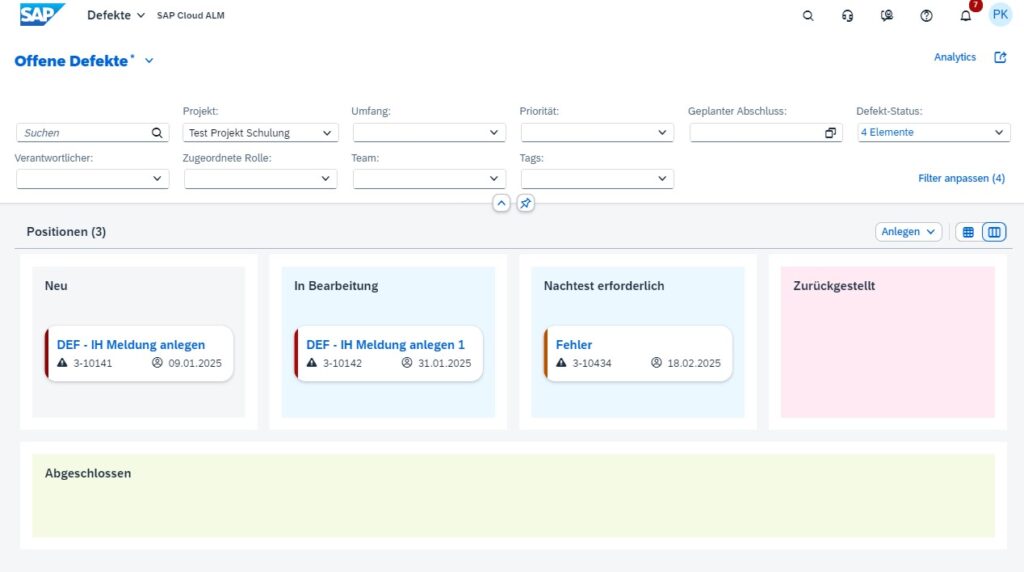
Furthermore, SAP Cloud ALM allows for the categorization and prioritization of defects, optimizing team work. The card view provides a visual representation of all open and closed defects, similar to a Kanban board, giving all stakeholders direct insight into the progress of problem resolution. Overall, SAP Cloud ALM improves defect management and increases stakeholder satisfaction.
Conclusion with a look to the future
SAP Cloud ALM provides a solid foundation for project management, enabling agile and efficient project management. I look forward to using SAP Cloud ALM in further projects and seeing how the cloud-based platform continues to evolve. It has already demonstrated its potential to optimize processes and improve collaboration. Of course, SAP Cloud ALM offers many more features, such as comprehensive monitoring, integration capabilities, transport management, and test management, which could further support even more efficient project management.