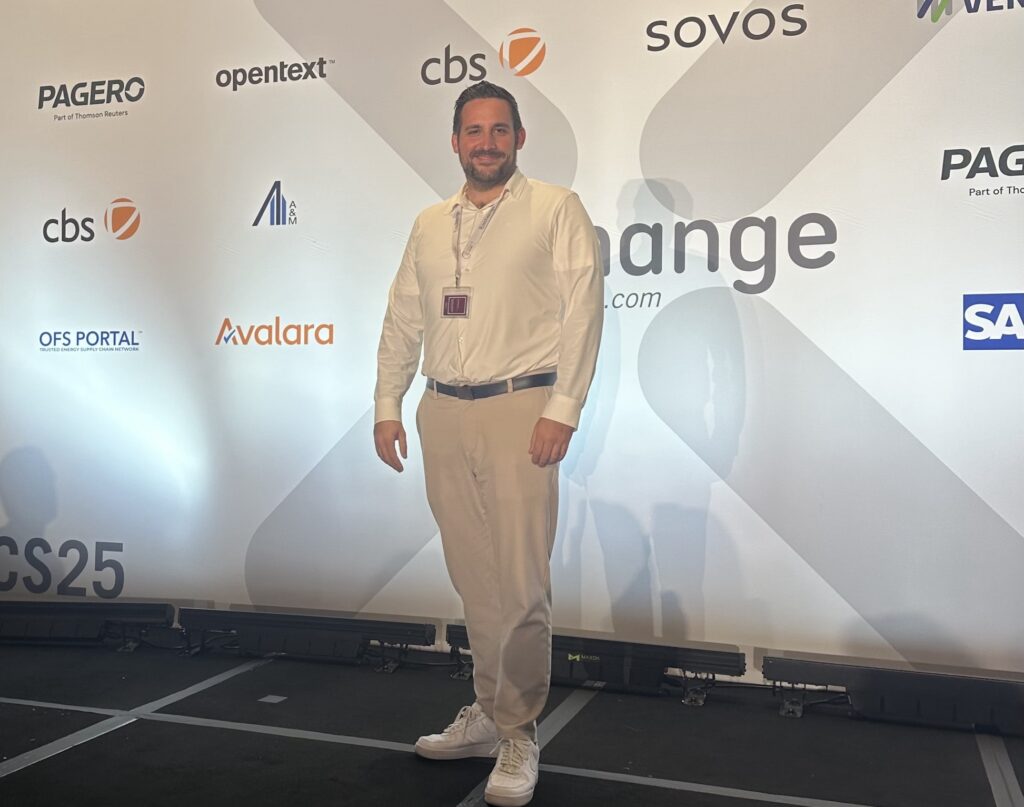
From March 24th to 26th, 2025, the E-Invoicing Summit took place in Miami – a significant event where leading e-invoicing specialists and experts from around the world came together to discuss the latest trends and developments in electronic invoicing. Amidst exciting discussions and insights, I, as a participant and representative of adesso business consulting AG, had the opportunity to experience firsthand how the world of e-invoicing is constantly evolving.
Is e-invoicing more than only „Invoicing“
Among the key themes at the summit was the realization that e-invoicing is far more than just the electronic transmission of invoices. It’s about the complete digitization and automation of the entire financial and accounting process. This involves not only invoices themselves, but also how companies can optimize their business processes, thereby simultaneously increasing efficiency and compliance. The trend is moving towards a fully integrated solution, where e-invoicing represents just one aspect of a comprehensive digital transformation.
Areas such as e-ordering and e-payslips are gaining increasing importance. Companies worldwide must prepare to integrate these new solutions into their existing systems to meet the rising demands of government tax authorities. A prime example of this expansion of digitalization is the recent announcement by the Serbian government that it will introduce e-delivery starting January 1, 2026.
Clean master data and business processes as the basis for success
Another topic addressed at the summit was the importance of clean master data in the SAP system. Without properly maintained and complete master data, e-invoicing cannot function efficiently and without errors. It was emphasized that companies wishing to successfully implement e-invoicing should first improve their master data management processes. This forms the foundation for the long-term, successful use of e-invoicing and is the key to error-free and automated processes.
An additional key point is that companies should first optimize their internal business processes before addressing e-compliance. It’s of little use to delve into the complexities of legal requirements if one’s own business processes are not efficient and smooth. A clear focus on process optimization is the first step towards seamlessly embracing electronic compliance and international standards.
E-invoicing in the United States: A special challenge
The situation in the USA was also particularly interesting. The American tax system is among the most complex in the world, and without central government regulation and mandates, the implementation of e-invoicing is especially challenging. In the first quarter of 2025 alone, 71 tax rates changed – a testament to the constantly evolving tax landscape. This means that companies face a multitude of regulations at the local level. This challenge makes it difficult for businesses to develop a consistent e-invoicing strategy and underscores the need for flexible and adaptable systems.
The Digital Business Network Alliance (DBNA) gave another exciting presentation, introducing its model with the slogan “Connect once, connect to all.” This model is functionally similar to Peppol, which is particularly well-known in Europe as a network for exchanging electronic invoices. The DBNA is pursuing a similar approach to advance the e-invoicing market in the US. It offers a means of interoperability with Peppol or other similar structures to make global e-invoicing as simple as possible.
SAP Document and Reporting Compliance: A good solution for e-invoicing
Tampa-based manufacturing company Jabil and cosmetics distributor Nu Skin reported positive experiences implementing SAP Document and Reporting Compliance (DRC). SAP DRC offers companies a powerful solution to meet the constantly evolving global requirements of electronic invoicing and tax reporting. DRC’s flexibility was particularly impressive, helping companies seamlessly adapt their processes to local and international regulations while ensuring high efficiency and compliance. Furthermore, DRC’s integration with the SAP Business Technology Platform (SAP BTP) guarantees “clean core” compatibility.
A conclusion with a view to the future
The E-Invoicing Summit in Miami was an excellent opportunity to gain deeper insights into global trends and challenges in electronic invoicing. It became particularly clear that e-invoicing is no longer just a technological solution. Rather, it is an integral part of the overall digital transformation, helping companies increase their efficiency while simultaneously complying with legal requirements.
The summit participants – including experts and product owners from SAP Document and Reporting Compliance – provided valuable insights into the constantly evolving landscape of international e-invoicing. It will be interesting to see how regulations develop and how companies worldwide integrate these new technologies and processes.
I look forward to using these new insights in my own projects and continuing to be an active part of this forward-looking development. If you’d like to learn more about legal requirements and the digital implementation of e-invoicing, check out another blog post of ours here!
Developments in e-invoicing and SAP’s powerful Document and Reporting Compliance (DRC) solution offer a promising future for the digital transformation of businesses. If you are interested in implementing SAP DRC in your company, I would be happy to discuss this further. Let’s take the next step towards efficient e-invoicing processes together!