Clean Core is one of the central buzzwords when it comes to the SAP Public Cloud. But what exactly is behind it? What does a clean core mean in the SAP context, and why is it so relevant for companies, consultants, and end-users? In this article, we take a practical look at the concept of the Clean Core, differentiate it from other SAP solution approaches, and demonstrate how organizations can concretely implement this approach in the SAP Public Cloud.
What is the SAP Public Cloud?
The SAP S/4HANA Cloud Public Edition is based on a multi-tenant SaaS architecture, where all customer instances are centrally operated and maintained by SAP on a common technical platform and codebase. Technical infrastructure, updates, and system availability are entirely the responsibility of SAP. Customers use the solution over the internet as a service. Configuration is primarily done via the central Central Business Configuration. Unlike the Private Cloud or on-premise installation, customers do not have direct access to the backend, no classic modifications, and no dedicated system landscape. Instead, they interact via predefined standard processes (Best Practices), cloud APIs, key user tools, and the SAP Business Technology Platform (BTP) to implement extensions. This architecture enables SAP to keep all customers on a common codebase and roll out central innovations quarterly without the need for individual migration projects at the customer’s end.
On-Premise vs. Cloud Solutions
While on-premise installations allow full control over system architecture, customizing, and in-house developments, they also entail more effort in terms of operation, maintenance, and release management. The SAP Private Cloud, on the other hand, offers a middle ground: enjoying more customization freedom than the Public Cloud without having to manage the maintenance effort of an on-premise solution. Technically, the Private Cloud, in contrast to the Public Cloud, is a single-tenant environment where customers operate their own instance, including classic ABAP access and broader customizing scope. Read more here about how the cloud variants differ.
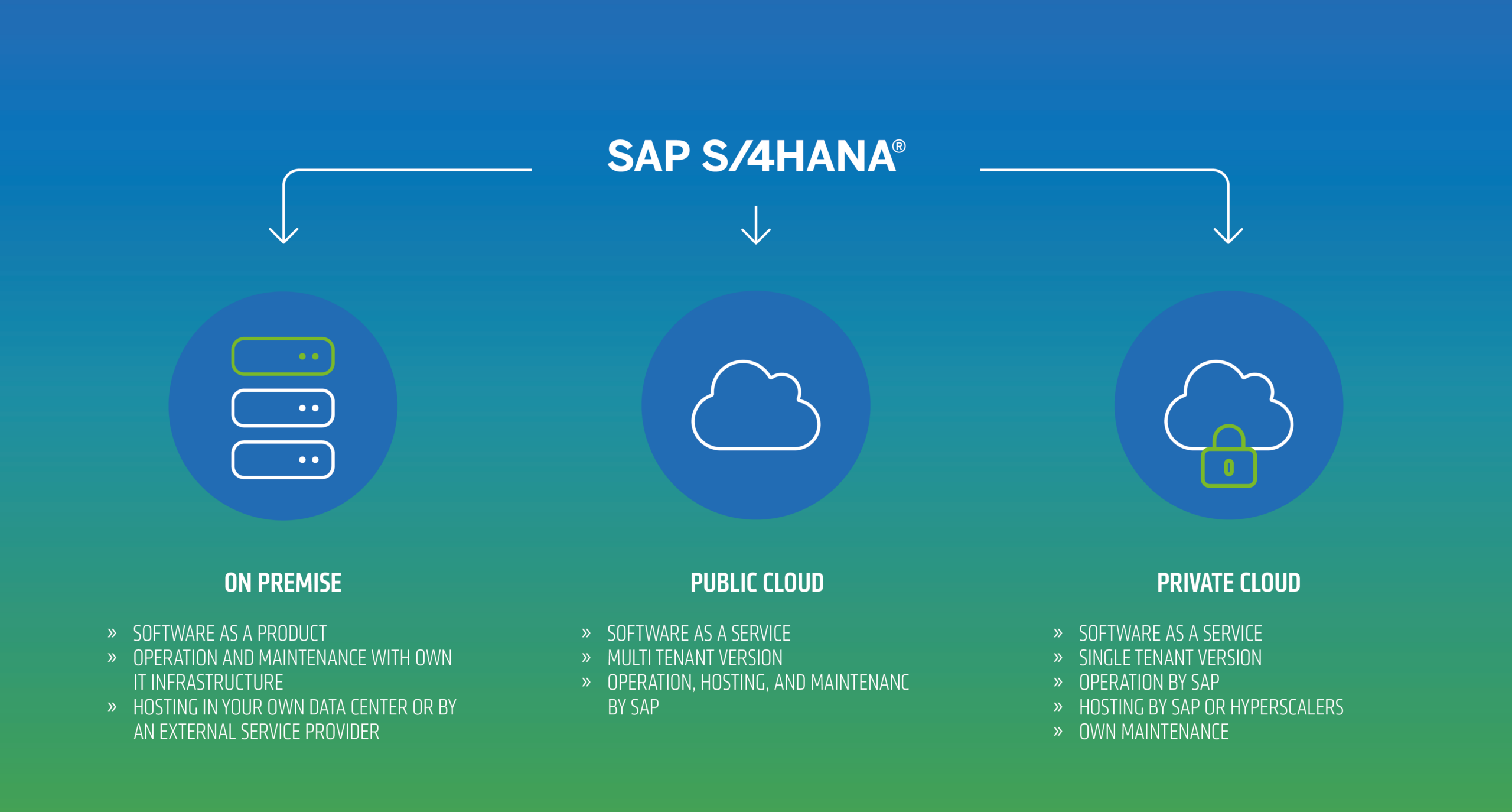
The standardization in the Public Cloud, in particular, makes the Clean Core concept especially relevant. This is because it is not just about efficiency but also about strategic future viability.
What does “Clean Core” mean?
At its core, the idea is that the SAP system should be modified as little as possible. The core, i.e., the central SAP system, remains clean in the sense of being close to standard and update-friendly. Instead of deep modifications to the system code, extensions and individualizations are implemented outside the core. This primarily occurs via the SAP BTP, in-app extensions, or side-by-side developments.
The Clean Core principle enables smooth update implementation and faster, less effort-intensive innovation. Furthermore, systems become less prone to errors, which ultimately leads to lower overall costs for IT and system operations in the long term.
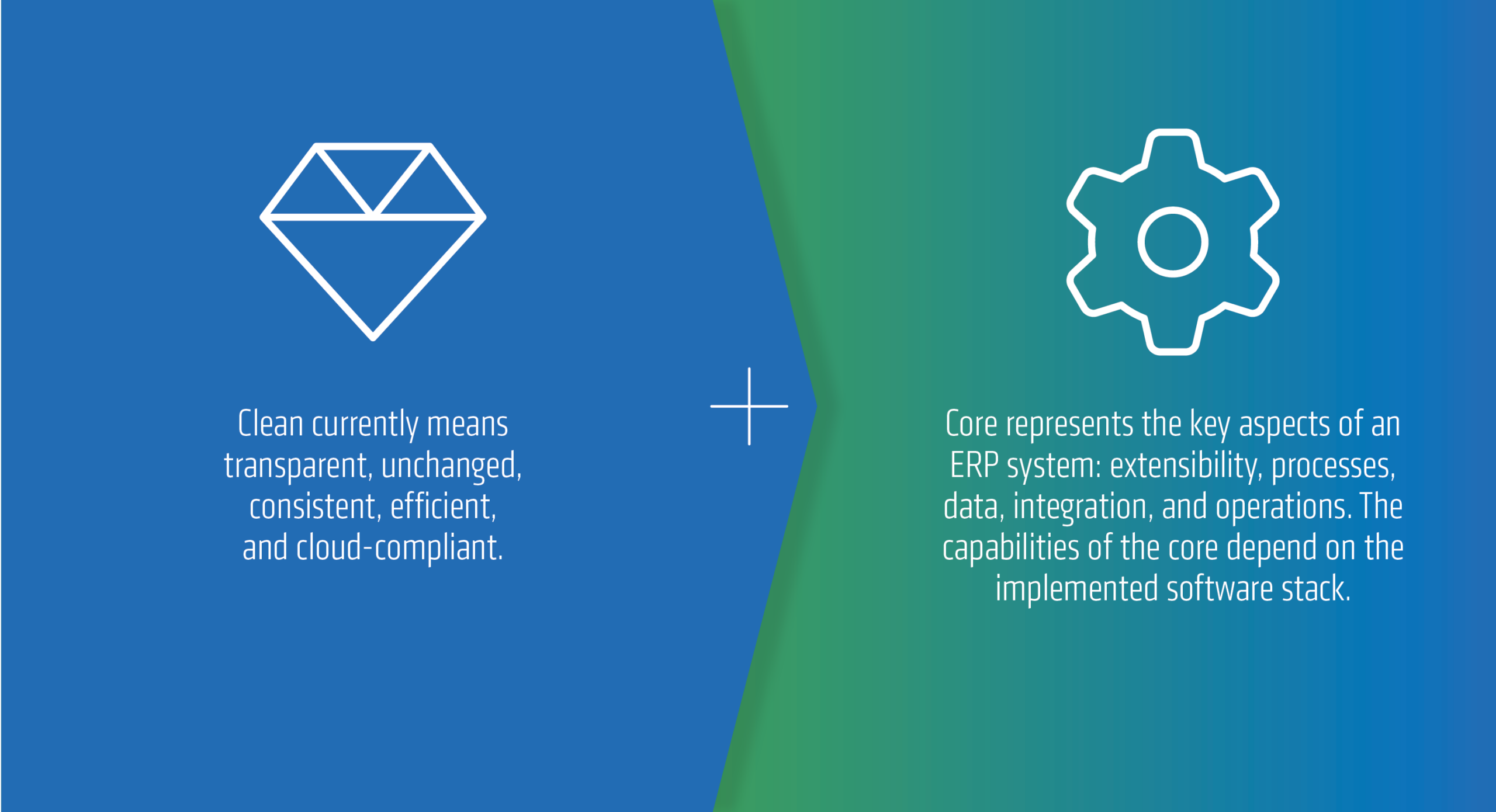
For many companies, the Clean Core marks a paradigm shift. While SAP previously adapted to customer processes, processes should now be adapted to the SAP standard as much as possible. The Clean Core is therefore not just a technical strategy but a cultural change.
How to achieve a Clean Core?
The path to a Clean Core is neither a one-time step nor a purely technical project. Rather, it is a continuous transformation process that affects organizations on multiple levels: strategic, procedural, cultural, and technical.
1. Create Awareness
The first step is a shared understanding among all stakeholders of the goal: Why are we striving for a Clean Core? What benefits do we expect from it? This awareness is crucial to prevent the later implementation of supposed emergency solutions in the system that would undermine the Clean Core. It is advisable to establish appropriate communication and training concepts during project preparation.
2. Establish Governance
A Clean Core thrives on clear rules. Companies must define which types of extensions are permissible and how they may be implemented. This is where SAP BTP comes into play: Side-by-Side Extensions allow additional functionalities to be developed without altering the core. Additionally, comprehensive lifecycle management is needed to transparently control changes. Further information on SAP BTP at adesso can be found here.
3. Accept and Shape Standardization
In the Public Cloud, the standard is the way. Those who opt for this solution must be willing to adapt processes to the SAP standard, not the other way around. This also means critically questioning processes, simplifying them, and being able to let go. Implementation does not begin with a “What do we need?” but with a “What is already there?”. This represents an important shift in perspective that many companies first need to internalize.
4. Utilize Tool Support
SAP offers various tools to support the Clean Core, such as Extensibility Cockpits, Key User Tools for in-app adjustments, and development environments on the BTP for side-by-side extensions. These tools enable many necessary adjustments to be implemented without changing the core. It is important that these tools are not only known to all developers but also consistently used and anchored in development guidelines.
5. Training and Enablement
Especially for key users and developers, it is important to understand how to work within the Clean Core model. Training on extension options, lifecycle management, and tools is essential. Decision-makers should also be trained to make future-proof decisions. A sustainable understanding is indispensable, especially when coming from a system landscape with historically grown in-house developments.
6. Anchor Clean Core Principles in Tenders and Partner Briefings
Many companies work with implementation partners. To secure the Clean Core in the long term, it should be clearly stipulated in tenders and contractual documents that the Clean Core principle has top priority. This prevents short-term solutions from becoming long-term liabilities.
What are the challenges?
A Clean Core brings clear advantages but also challenges. All departments must be willing to abandon painstakingly created Z-developments. This requires active change management support. IT must also rethink and move away from individual workarounds towards sustainable extensions based on SAP Fiori, CDS Views, APIs, or the BTP. This not only changes roles and responsibilities but also initially creates a greater need for coordination between business and IT, as more decision discipline is required. External partners must also adapt to new framework conditions, as not every implementation partner is experienced in the Clean Core. In summary, this means not only a need for awareness but also active change management, clear communication, understanding, and discipline.
Our experience shows, however, that the investment is worthwhile. Organizations that decide early on for the Clean Core and approach it strategically will benefit in the long term from a more agile, transparent, and lower-maintenance system landscape. The effort in the initial phase will be more than compensated in the medium term by reduced maintenance costs, fewer errors, and a higher innovation speed.
Conclusion: Clean Core as a strategic foundation
The Clean Core is more than just a technical principle. It is a foundation for future-proof SAP systems and a lever for greater standardization, efficiency, and innovation. Especially in the SAP Public Cloud, this principle is not optional, but essential. Companies that consistently follow this path not only streamline their IT operations, but also create the basis for faster releases, lower operating costs, and significantly greater flexibility, even if the initial investment is substantial. At the same time, this path requires courage to change, clear guard rails, perseverance, and a rethinking at the IT level, extending into the specialist departments.
Your companion adesso
At adesso, we provide companies with strategic, technical, and cultural support to successfully manage the transition to Clean Core. If you would like to learn more about how to future-proof your SAP system, please do not hesitate to contact us. We support you with methodology, experience, and a clear view of the essentials for a clean, stable, and sustainable SAP system. If you would like to read more on this topic, you can find another blog post here.