For a long time, SAP Quality Management had an image problem. In many implementation projects, QM was treated as a checkbox — something you activated because the auditor asked about it, then configured just enough to pass inspection. It lived in the shadow of Production Planning, borrowing its master data, reacting to its processes, and rarely driving anything of its own. If SAP PP was the engine of the manufacturing suite, QM was often the spare tyre: good to have, rarely used.
That perception is now dangerously out of date. SAP QM has undergone a quiet but profound transformation over the past decade, and organizations that still treat it as an optional add-on are leaving significant value on the table. Today, SAP QM is a fully mature module with its own process logic, integration depth, and strategic relevance — one that deserves a seat at the table in every S/4HANA implementation conversation.
The Old Reputation — and Where It Came From
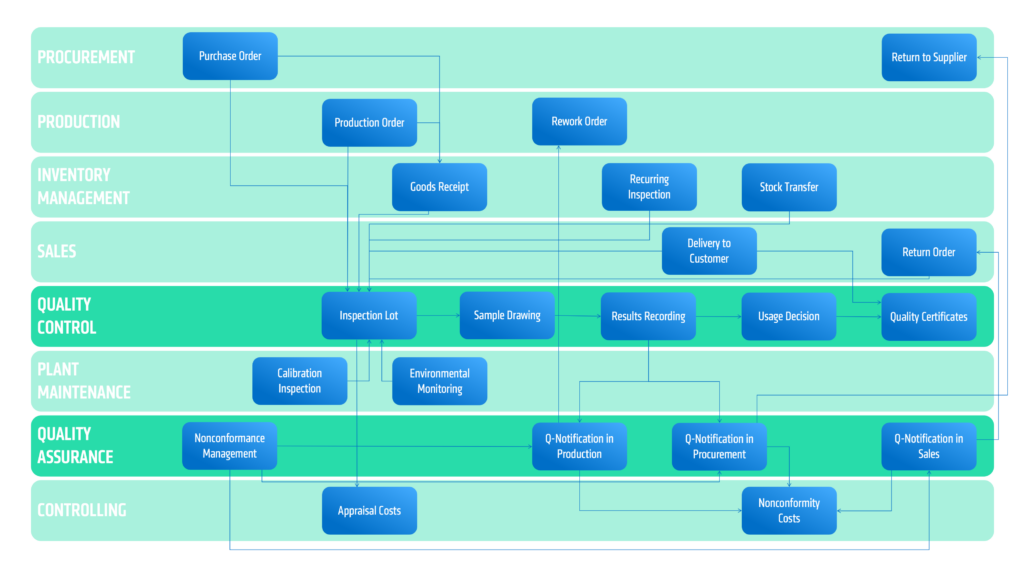
The ‘little brother’ label was not entirely unfair in the early days. SAP QM was introduced as a component that reacted to events in other modules: a goods receipt in MM triggered an inspection lot; a production order completion in PP triggered a final quality check. Without PP or MM, there was not much for QM to do. Its master data — materials, plants, vendors — were all owned by other modules. QM simply attached quality rules on top.
This dependency created a perception that QM was derivative by nature. Consultants who specialized in PP or MM knew QM well enough to configure basic inspection types, but deep QM expertise was rare. In many organizations, the QM configuration was done by a PP consultant as an afterthought, and the module was never really given the chance to show what it could do.
What Changed: A Module That Now Stands on Its Own
The shift happened gradually, but the arrival of SAP S/4HANA accelerated it considerably. Several developments transformed QM from a reactive satellite into a proactive system of record for quality.
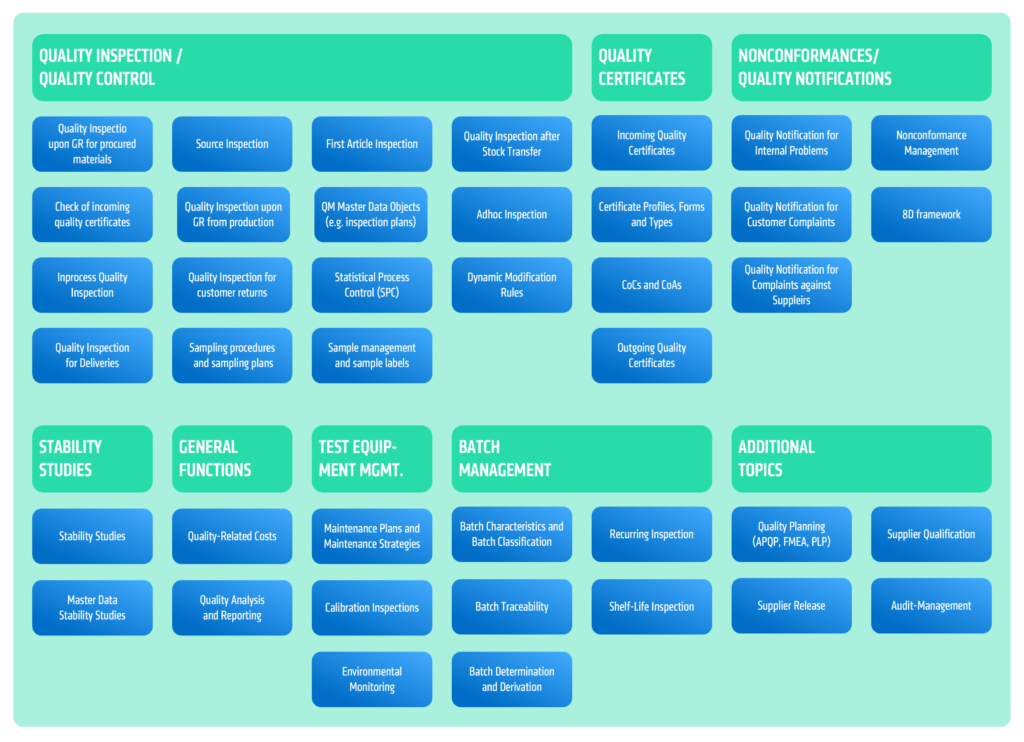
First, the inspection lot became genuinely powerful. In older releases, inspection lots were primarily posting objects — you recorded results, made a usage decision, and moved on. In S/4HANA, the inspection lot is the backbone of a rich process: it carries characteristics, sampling procedures, dynamic modification rules, certificates, and notification links. It connects upstream to vendor evaluations and downstream to batch classification, enabling quality data to flow across the entire supply chain without manual intervention.
Second, the Quality Notification evolved from a simple defect record into a cross-module workflow hub. A notification raised in QM can trigger the creation of a repair order, send interim and final notice to a specific customer, a return delivery for materials sent back to suppliers, or a corrective action task tracked against a responsible user. The notification is no longer a dead end — it is a process initiator.
Third, and perhaps most significantly, SAP QM developed deep integration capabilities that no longer require PP to be the intermediary. Quality inspections can now be triggered by production and process orders, calibration schedules, stability studies, and customer returns. The module has its own certificate management, its own digital signature framework for regulated industries, and — as we will explore in detail in Article 3 — its own API layer for connecting to laboratory equipment and external quality systems.
Master Data That Belongs to Quality
One of the clearest signs of QM’s maturity is its own master data ecosystem. The Inspection Plan, the Quality Info Record, and the Master Inspection Characteristic are objects that exist entirely within QM’s domain. The Inspection Plan defines what gets checked, how, and by whom — independent of the routing in PP. The Quality Info Record e.g. controls whether a supplier’s material requires a release. The Master Inspection Characteristic standardizes the language of quality across plants and business units.
These objects mean that a quality manager can now design and maintain an inspection strategy without needing to involve a PP or MM consultant. The quality process has its own configuration logic, its own release mechanisms, and its own version control. This independence is not just organizational convenience — it is the foundation for complying with standards like e.g. ISO 9001, ISO 13485, 21 CFR Part 11 and GxP regulations, where demonstrable control over quality processes is a requirement.
Analytics and Visibility: Quality as a Strategic Signal
The final dimension of QM’s transformation is analytical. In the legacy world, quality data sat in inspection lots and notifications — accessible via transaction codes, but rarely surfaced in management reporting. In S/4HANA, embedded analytics bring quality KPIs into the same dashboards as procurement, production, and finance data.
Rejection rates by vendor, detailed characteristics analytics, open defect notifications by plant — these are now available as standard Fiori analytical apps without any custom development. Quality is no longer a back-office process visible only to the QM team; it is a strategic signal visible to supply chain managers, plant directors, and procurement heads. That shift in visibility changes the conversation about what quality management is worth investing in.
The Series Ahead
This article is the first in a five-part series designed to give SAP practitioners and business decision-makers a current, honest picture of what SAP QM can do.
In Article 2, we will move from the conceptual to the concrete — exploring the building blocks of traceability: batches, production orders, serial numbers, and shop floor controls, and explaining when each one is the right tool. Article 3 digs into one of QM’s most exciting modern capabilities: API-based integration with laboratory equipment and LIMS systems. And Article 4 takes an industry lens, examining how QM’s features map to the specific compliance and operational demands of pharmaceuticals, automotive, and food and beverage. Finally, Article 5 looks at a collaborative Merck/adesso project that extends the QM landscape side by side on SAP BTP — and at the role of AI as a governed assistant in quality change control.
The common thread across all four articles is the same: SAP QM is no longer a module you implement because you have to. It is one you implement because it gives you a genuine competitive and compliance advantage — and that distinction matters more today than it ever has.