What is SAP HCM and why is it (still) important?
SAP Human Capital Management (HCM) is one of the leading solutions for optimising human resources management. However, as SAP HCM will be discontinued by 2027, companies need to start looking for successor solutions early on. With the SAP Extended Maintenance Service, an extension until 2030 is possible, but after that, support will end for good.
For companies that continue to rely on an on-premise solution, SAP offers the option of switching to H4S4. This bridge technology facilitates the transition from SAP HCM to SAP S/4HANA while retaining the proven functionality of SAP HCM in a modern SAP environment. H4S4 focuses on consolidating and simplifying existing functions without major innovations and offers a long-term solution until 2040 for companies that do not yet want to move to the cloud.
Alternatively, SAP offers SuccessFactors, a comprehensive, cloud-based HR solution that is particularly suitable for companies wishing to move their HR processes to the cloud. However, companies that deliberately choose not to use the cloud can continue to rely on H4S4 as a dependable option.
The main components of SAP HCM
The core modules include:
- Personnel Administration (PA): Management of employee data and implementation of recruitment processes. This module also includes Organisation Management (OM), which maps the structure of the company and defines the hierarchies and responsibilities of individual positions.
- Payroll (PY): Processing of payroll accounting, including the calculation of salaries, taxes and social security contributions, as well as the administration of payments.
- Time management (PT): Management of working hours, shift schedules and absences. This is where employees’ attendance times are recorded and used for payroll accounting and planning.
In addition to these core modules, SAP HCM offers the following additional modules: Personnel Development (Talent Management), Event Management (PE) and Recruitment (PB).
Structures in HCM
An HCM system helps companies map their organisational structures and the relationships between employees. It divides the company structure into two main areas:
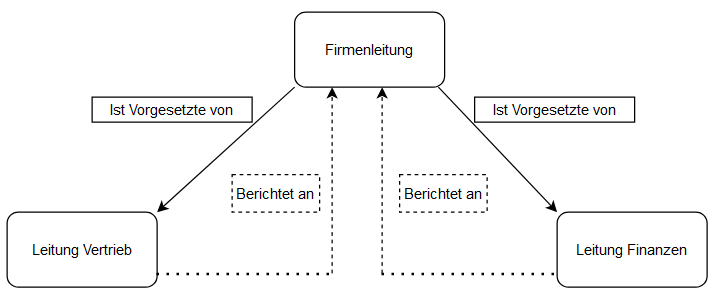
Organisational structures that show the hierarchies and reporting lines within a company.
Administrative structures that deal with the working time and salary-related aspects of companies and employees.
The organisational structure forms a complete model of the internal company structure. This model clearly shows hierarchies and reporting structures. It forms the basis for organisational management and works with so-called objects, such as organisational units (departments), jobs (positions) and posts (specific workplaces). Three main areas are modelled in the HCM system: company structures, personnel structures and organisational structures.
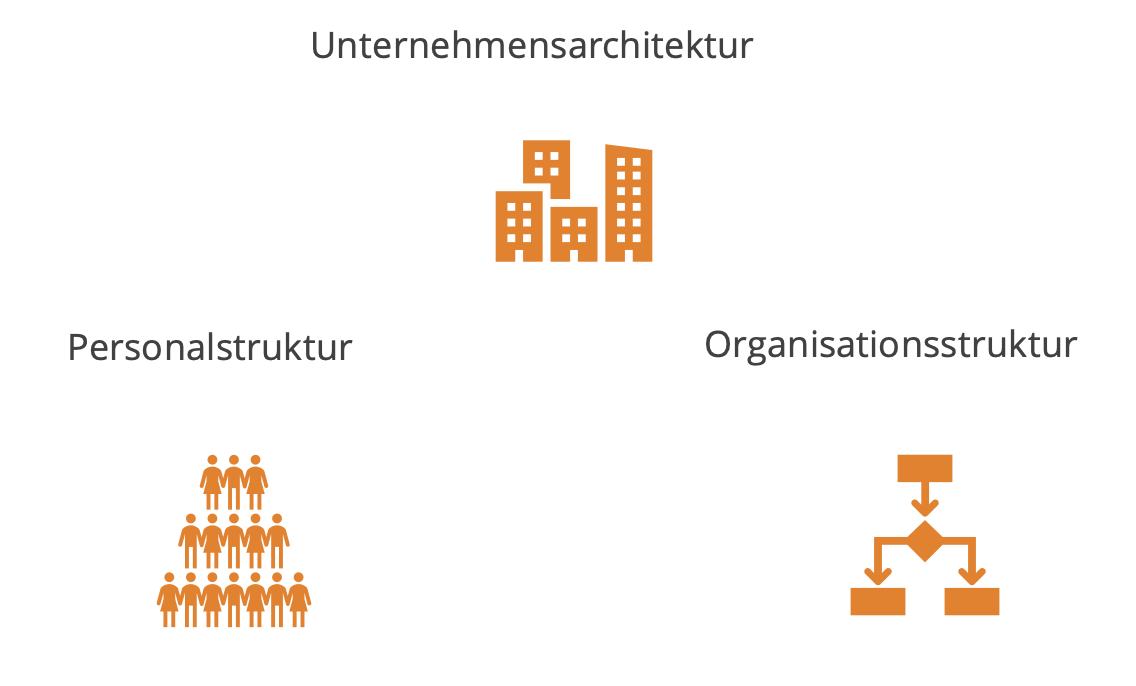
Organisational Structure in SAP HCM
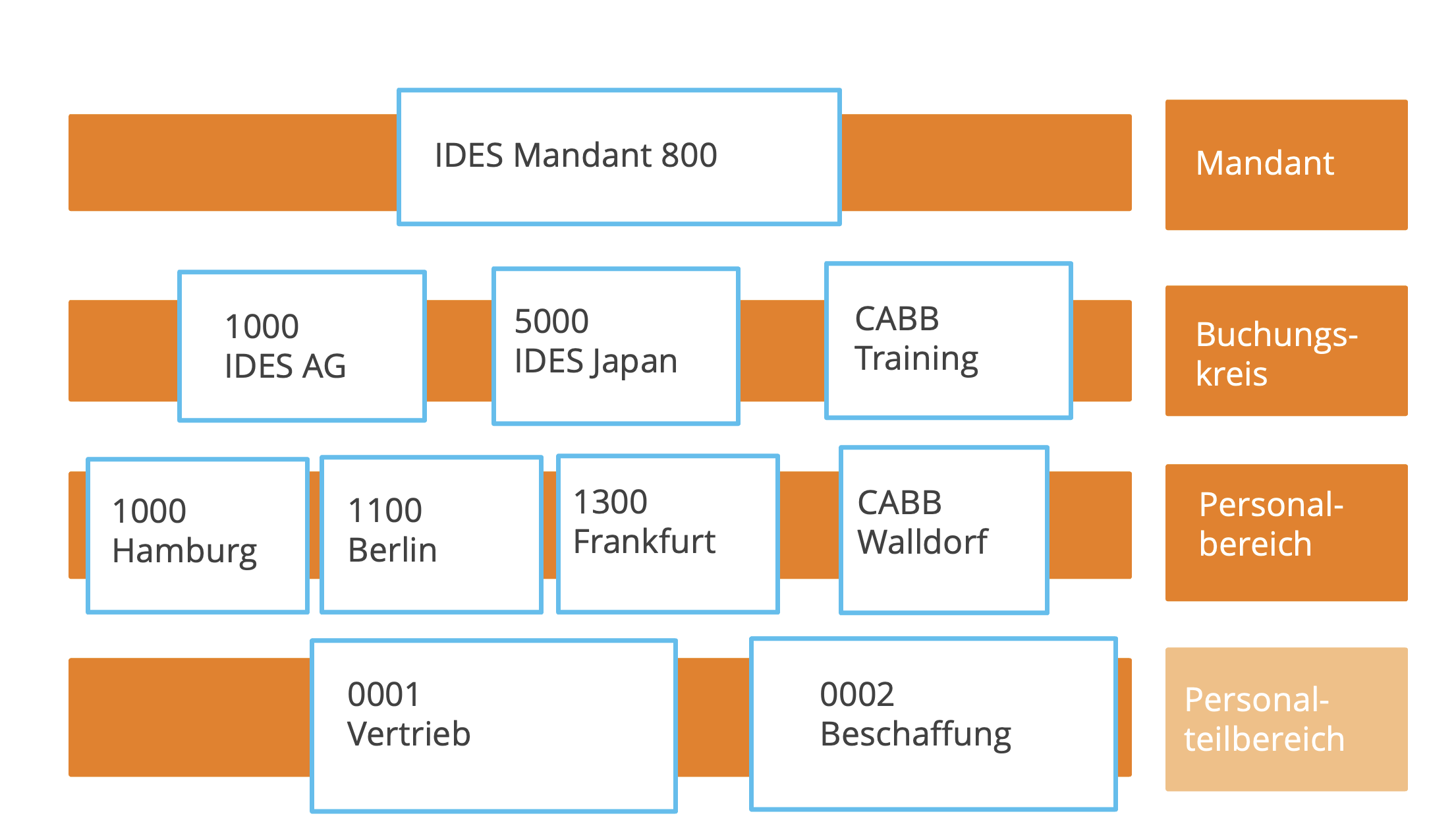
The corporate structure reflects the formal and financial structure of a company. It defines various organisational levels, which can be divided geographically or functionally. The most important organisational levels include clients, company codes, personnel areas and personnel subareas.
The personnel area is a defined unit within a company code that is responsible for managing human resources processes. It is identified by a unique four-digit alphanumeric key. Personnel areas can be further subdivided into smaller units, known as personnel subareas, which are also identified by a unique key. Central functions such as pay scale regulations, wage structures and working hours are managed at this level. For example, personnel area 1000 Test Ltd. has four personnel subareas: 0001 Test Ltd. Administration, 0002 Test Ltd. Purchasing, 0003 Test Ltd. Sales, and 0004 Test Ltd. Production.
Personnel structure in SAP HCM
The personnel structure distinguishes employees according to their position in the company. This enables responsibilities and working hours to be assigned accurately. The employee structure is simple: employee group (highest level) and employee circle (second highest level), which classify employees according to status and employment relationship, payroll area and organisational key. The employee group represents different types, such as active employees, pensioners or early retirees. These groups serve as the basis for authorisation checks, determining remuneration levels and creating work schedules.
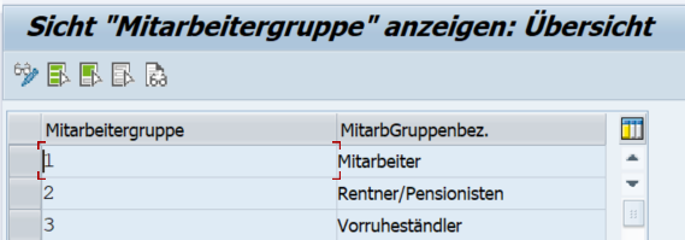
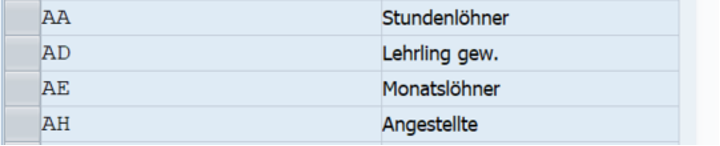
Employee circles are a detailed subdivision of employee groups. Within the group ‘active employees’, for example, a distinction is made between wage earners, salaried employees and non-tariff employees.
Payroll areas are organisational units used for payroll accounting. They enable standardised values to be defined for payroll accounting. Industrial employees are often paid on the 15th of the month, while salaried employees are paid at the end of the month.
The organisational key is the final element of the personnel structure and consists of a fourteen-digit field. It enables a more precise assignment of employees within the company and personnel structure and plays a central role in authorisation checks.
Organisational Structure in SAP HCM
The organisational structure reflects the hierarchies and reporting lines within a company. While the corporate and personnel structures are mainly relevant for payroll accounting, the focus of the organisational structure is on the functional and task-related structure of the company. It defines the roles and tasks of employees and represents the hierarchical structures and reporting lines on an object-oriented basis.
The central elements of the organisational structure include organisational units (such as departments), positions (positions filled by employees, e.g. clerks in purchasing) as well as jobs, tasks and work centres, which specify the view of specific objects in Organisational Management (OM). The person also plays a decisive role here, especially if a link to personnel administration (PA) is to be established.
Master data in SAP HCM
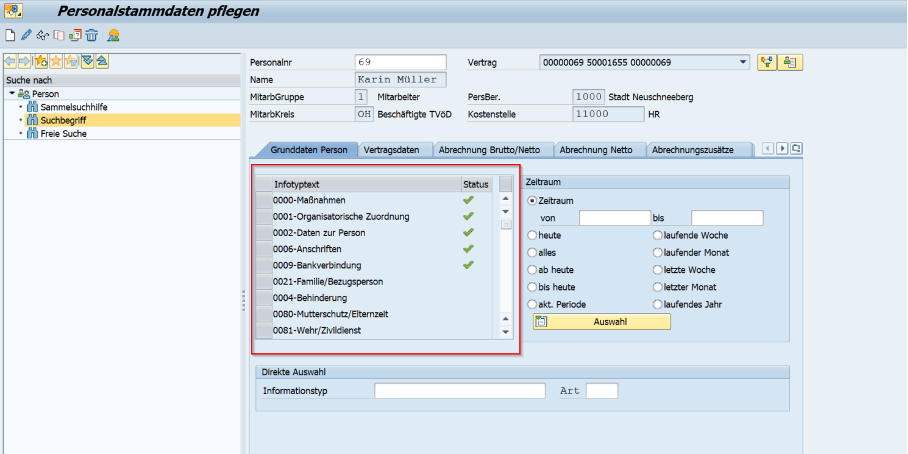
Employee data is recorded in data fields. These data fields are grouped together into units of information called infotypes. Each infotype has a name and a four-digit numeric key.
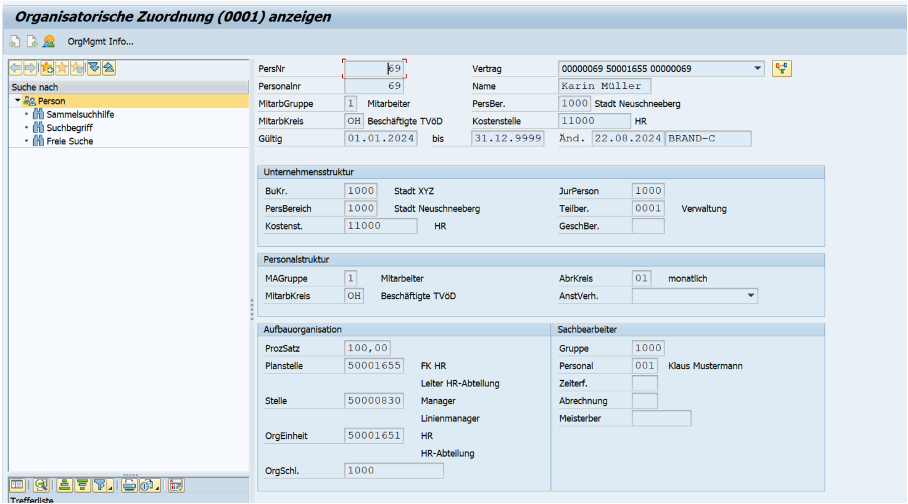
Examples of infotypes are: 0001 – Organisational Assignment, which stores an employee’s affiliation to an organisational unit, and 0002 – Personnel Data, which contains personal information such as name and date of birth. To maintain employee data, use transaction PA30 Maintain HR Master Data, where you enter the personnel number to access the master data.
The Future of SAP HCM
SAP HCM is a comprehensive human resources management solution that helps companies organise and manage their employees efficiently. The various modules, such as personnel administration, payroll accounting and time management, offer integrated functions for mapping complex company structures and managing employee data. With SAP HCM due to be discontinued in 2027, it is crucial for companies to start looking at successor solutions such as H4S4 or SuccessFactors at an early stage. The structured collection and management of master data and the clear definition of organisational structures are essential to ensure a smooth transition and maintain efficiency in human resources management.