With SAP Measurement Concept Management (MCM), SAP is introducing, for the first time within the product of Distributed Energy Resources, a cloud-based solution that enables grid and metering point operators to manage their metering points centrally and systematically. As part of the SAP S/4HANA Utilities Transformation, energy utilities will be able to deploy this solution in production, thereby establishing a key component of their future IT architecture. The cloud is not used for supplier systems – here, the MCM processes handle master data management as part of the market communication processes, which we examine in a separate article.
MCM addresses a key challenge facing the industry: the increasing complexity of metering points due to smart metering systems and decentralized generation units. At the same time, demands on data quality, process throughput times, and automation are rising. The MCM Cloud and the associated adapter for S/4HANA Utilities address precisely this – together, they function as a central hub for change processes involving a metering point’s master data. SAP establishes a holistic view of these processes – from the grid connection order via the meter installation to successful registration with the supplier.
We answer the key questions energy suppliers ask themselves before implementation: What functions does the MCM offer? What opportunities and challenges does an MCM implementation present? Why is this not just a technical innovation, but a new principle that requires a shift in thinking regarding processes and master data?
The Metering Concept Management offers these functions
Central view of the metering point
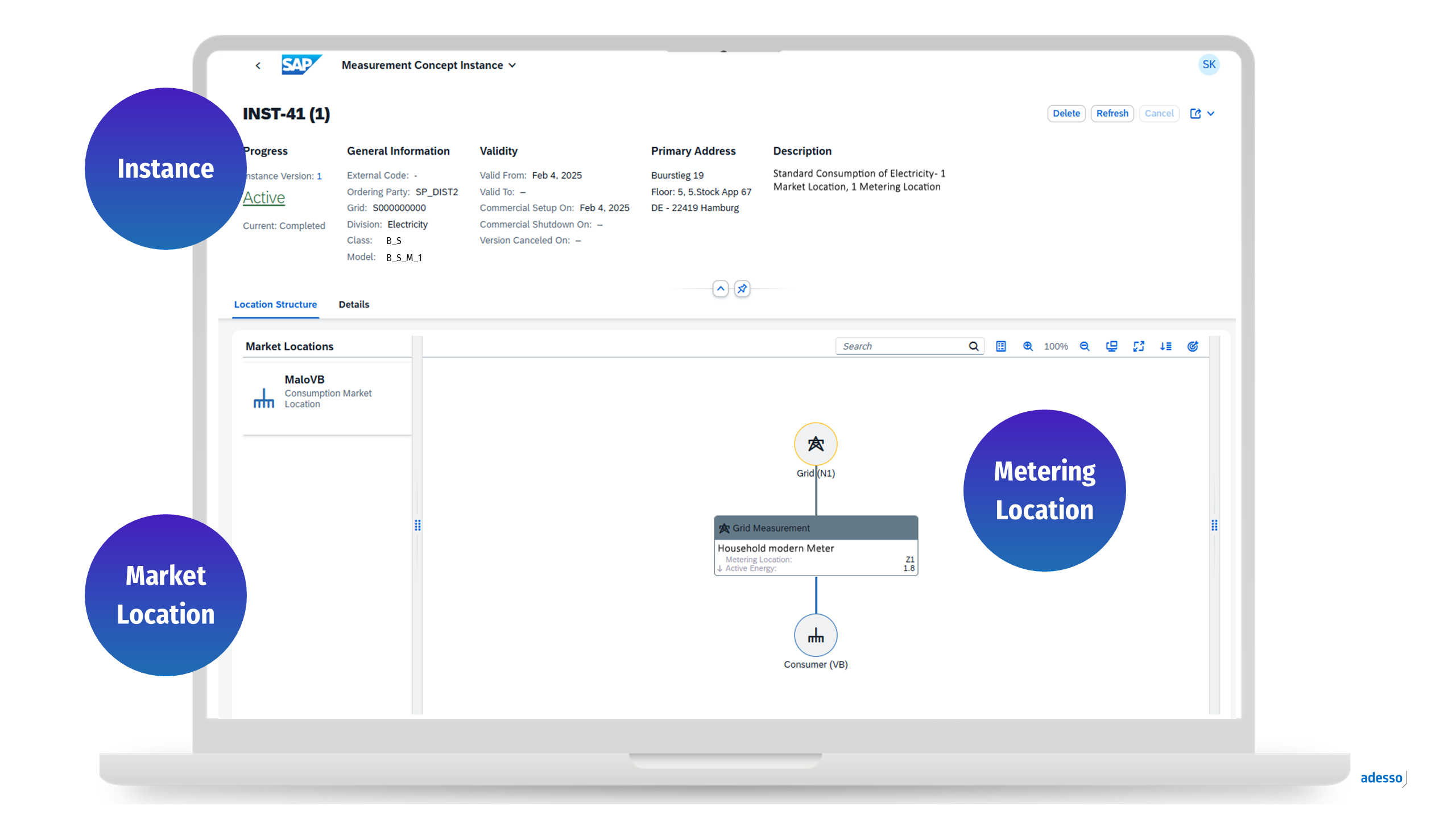
A key benefit of the MCM is the centralized overview of all relevant information for a metering point. In new Fiori apps, users and key users in the cloud gain a consolidated view of technical and commercial relationships. MCM aggregates the information and distributes it across multiple systems. This means that relevant data for a metering point – such as market and metering locations, calculation formulas, and process status – is available in a consolidated form, starting from the moment the grid connection process order is created.
Cloud integration and flexible integration into the system landscape
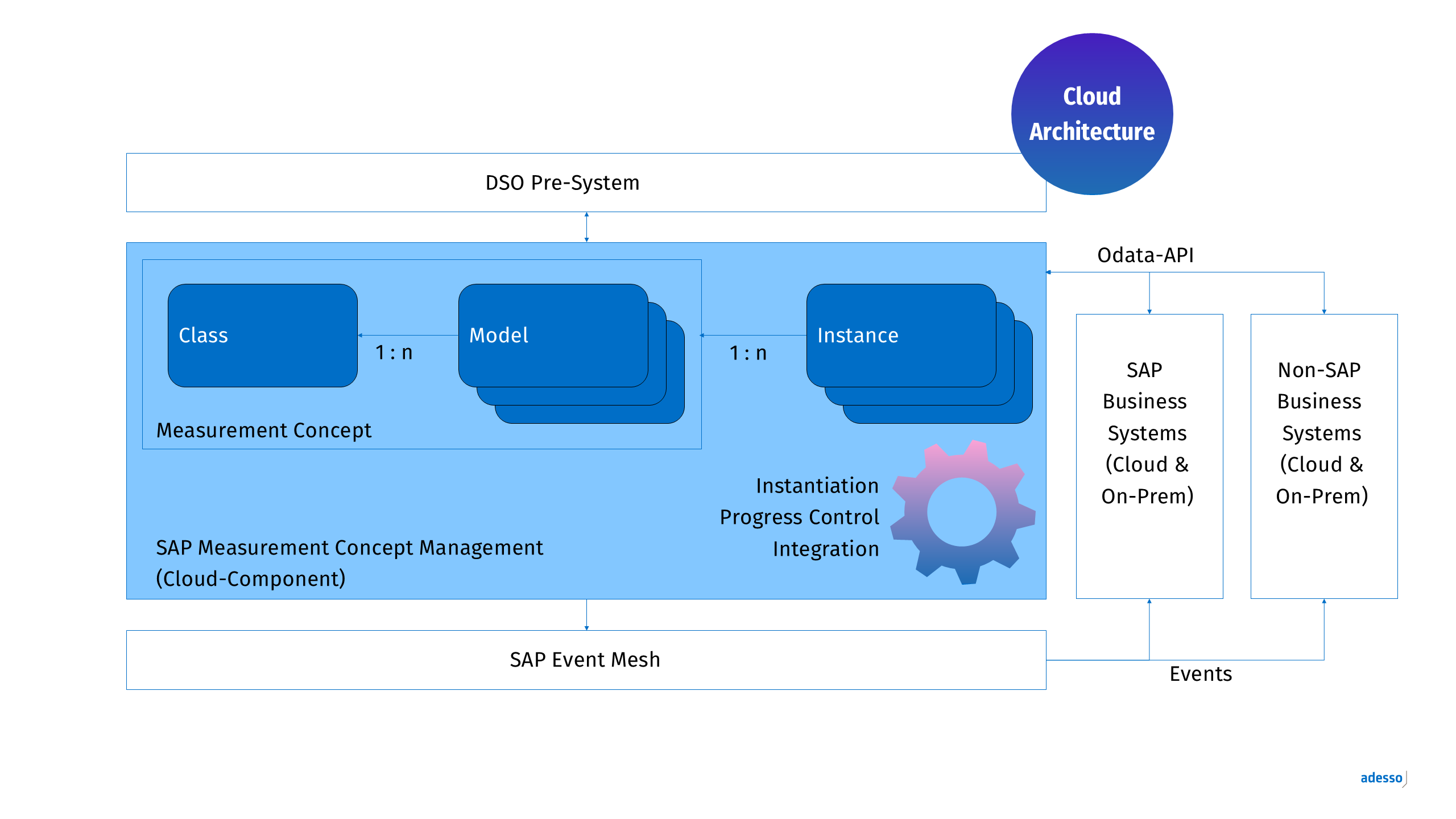
The MCM is designed as a cloud solution and can be flexibly integrated into existing IT landscapes. External systems, such as grid connection portals or customer-specific front-ends, can be connected via standardized oData API interfaces. The cloud serves as the leading system for measurement concepts, while master data processing continues to take place in the SAP S/4HANA Utilities system.
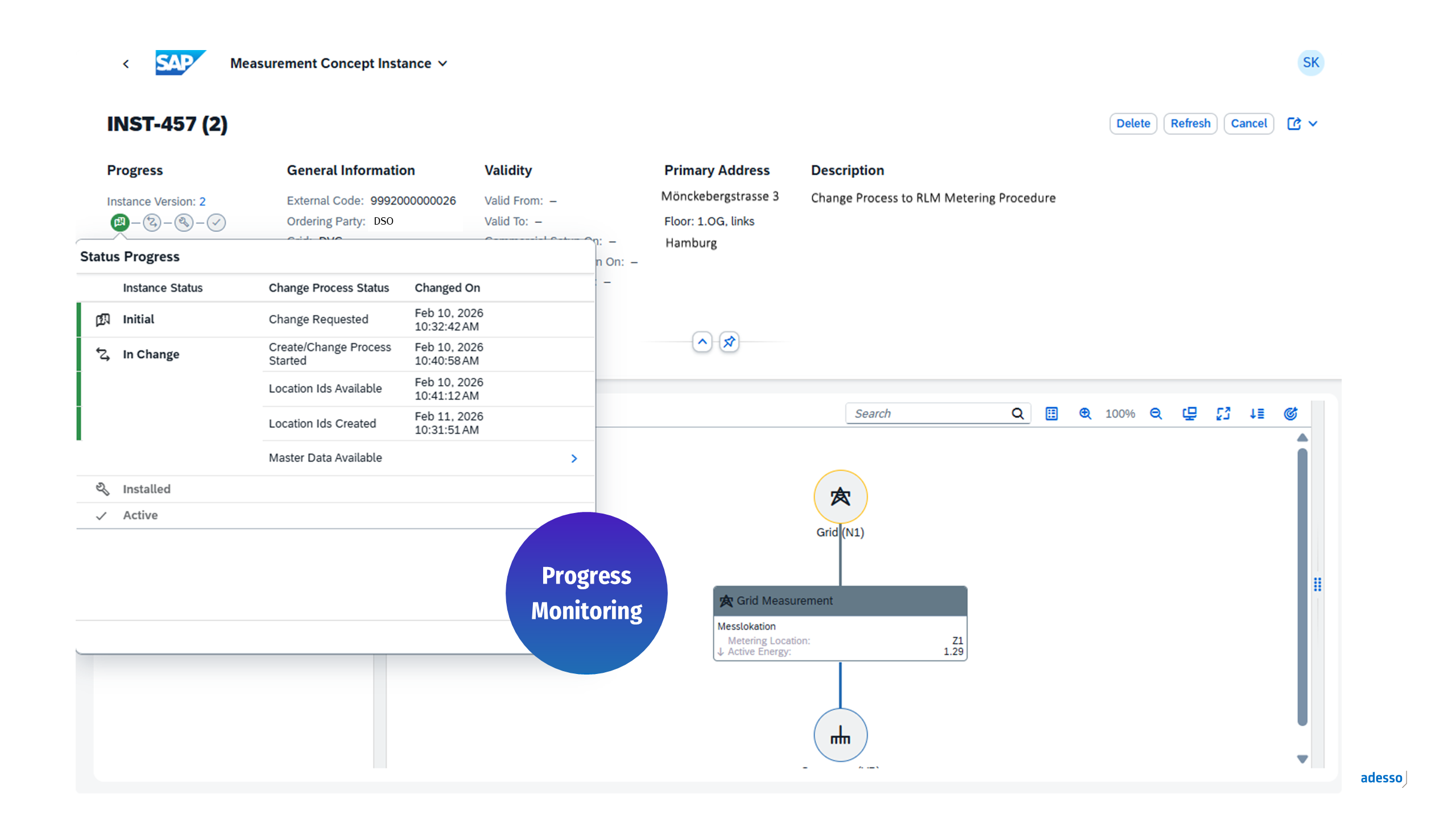
Thanks to extensibility options in the MCM data model and event-based communication via SAP Event Mesh, processes can be flexibly controlled and systems loosely coupled – thereby eliminating the need for additional interfaces. Relevant milestones in the master data setup process, such as order creation, meter installation, and commercial setup, can be distributed across the system landscape via events.
Central Metering Concept Catalog as a Technical Foundation
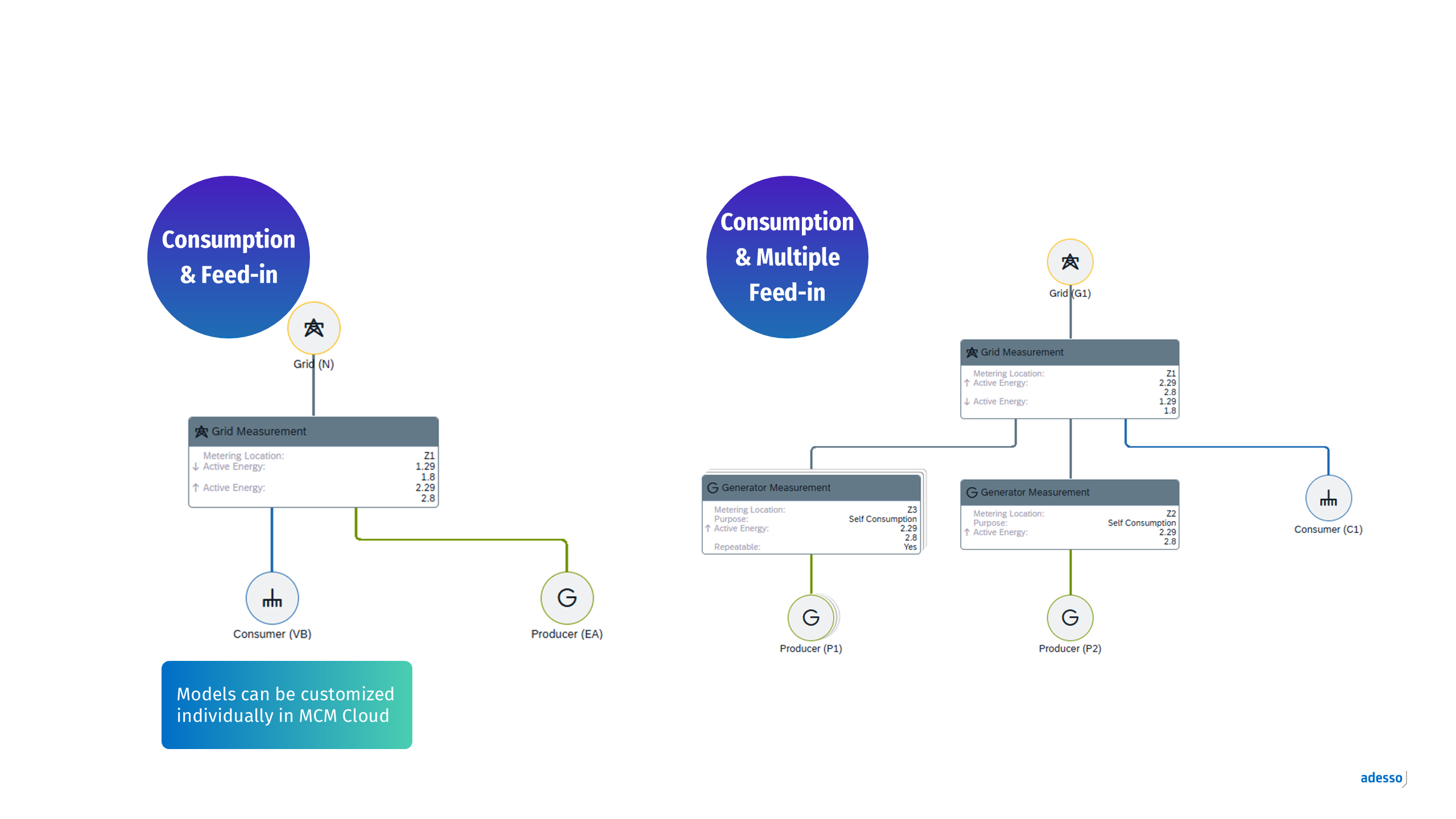
A central element of the MCM is the measurement concept catalog in the cloud. All measurement concepts relevant to the company are defined and maintained in this catalog. For example, metering concepts for consumption, consumption with feed-in, or full feed-in can be defined. A metering concept consists of the following building blocks:
- Market and metering locations
- Consumers and generators such as wallboxes, photovoltaic systems, storage units, or heat pumps
- Metering tasks according to the standard load profile method or interval reading measurement, as well as energy direction and OBIS code
- Calculation formulas for billing, grid usage, settlement, and renewable energy and overtake and undertake quantities
- Location bundle structures
The metering technology itself is not a feature of a metering concept; therefore, conventional, modern, and smart metering devices can be used within the same metering concept. Metering concepts can be defined for the regulated sectors of electricity and gas as well as the monopoly sectors of water and remote heating.
SAP is introducing new terms in the cloud for the measurement concept catalog and the metering points themselves, thereby creating a common technical language across departments. The measurement concept catalog consists of measurement concept classes and measurement concept models and serves as a standardized building blockfrom which individual metering point configurations (measurement concept instances) can be derived. The measruement concept classes are used to map the physical view. Building on the classes, the measruement concept models are defined for the commercial view.
Automated master data processes in the S/4HANA Utilities system
The MCM supports the lifecycle of a metering point, from creation through changes to decommissioning. Changes to the metering point, e.g., due to the addition of a generation plant, are controlled by processes and consistently implemented in the S/4 system via the MCM Backend Adapter. This ensures that the master data is structured according to a uniform schema. The Backend Adapter ensures the technical connection to the cloud and consists of processes and Customizing tables in which customer-specific rules can be defined.
The process of an MCM run can be simplified into two steps:
- Parameterization in the MCM Cloud
Basic connection data such as address, business partner, and a selected metering concept model are transferred from a source system to MCM. Based on this, the cloud automatically triggers a new creation or change process. The cloud data serves as the structural frame for the master data in S/4. - Automatic creation and refinement in the Utilities System
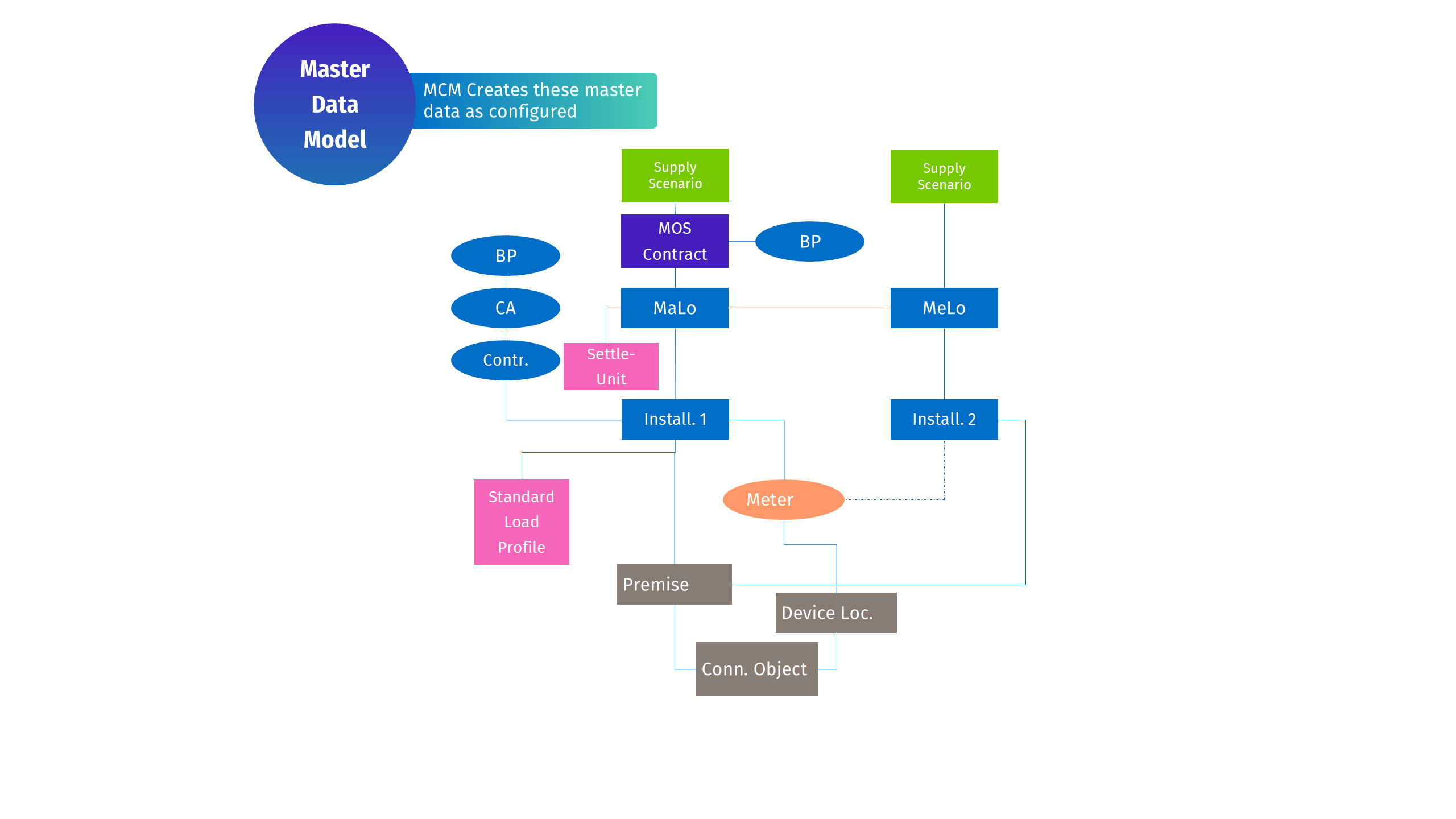
The data is mirrored into S/4 and a process chain is initiated. The processes ensure that master data is created or modified only in accordance with predefined and validated derivation rules.- Market and metering locations from the cloud are consistently transferred.
- Technical master data such as connection objects, premises, device locations, utility installations, load profiles, and meter and meter unit attributes are created based on rules.
The Opportunities of an MCM Implementation
Automation and scalability
When switching from conventional to modern metering equipment or rolling out smart metering systems, numerous technical and billing attributes must be adjusted. Customers with photovoltaic systems also rely on seamless collaboration with metering point and grid operators. The high degree of automation in MCM accelerates and standardizes these processes, thereby reducing the workload on business units.
To ensure the necessary flexibility, SAP offers customer-specific extension points within the processes for all master data. These can be used to adapt the processes to the company’s needs and to implement custom calculation logic that goes beyond the complexity of the standard customizing tables.
The energy industry is evolving dynamically; future concepts such as energy sharing and tenant electricity models place growing demands on data and processes. In these areas, energy suppliers can benefit from future releases of SAP.
Ensuring Master Data Quality
To ensure that master data in S/4 remains consistent, the MCM performs numerous checks during process execution that are clearly based on the rules configured in the backend adapter. This performs a “goods receipt check” of new data in the system. Errors are detected early and resolved through clarification cases, ensuring that data quality remains high.
The provided MCM processes and standard functions process master data in accordance with the SAP Master Data Reference Model. This includes master data recommendations for the German energy market for mapping different metering points depending on the utility company’s market role, and the configuration of the backend adapter allows for the configuration and processing of a wide variety of master data variations.
Integration
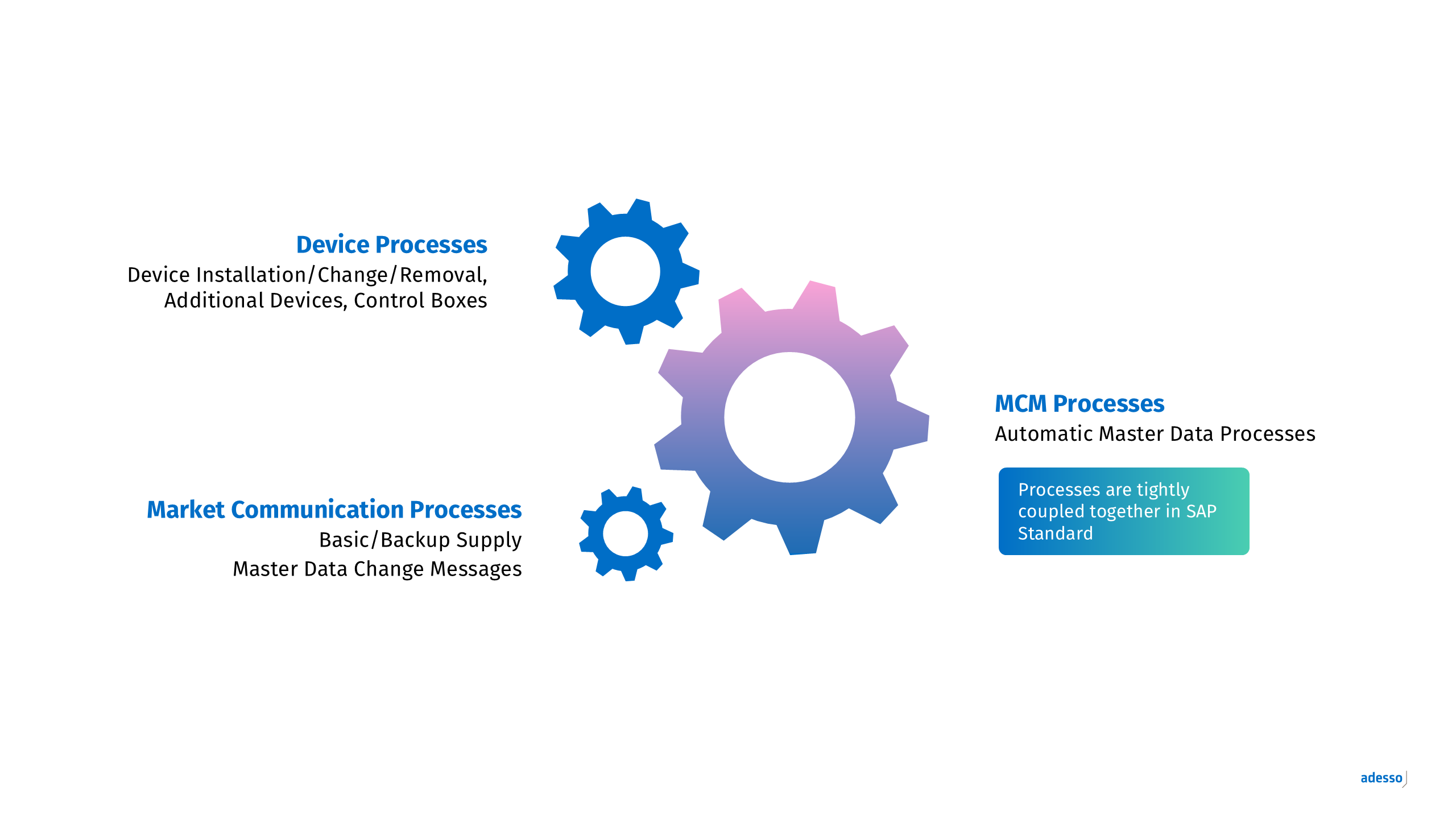
The MCM is closely integrated with existing device and market processes in the S/4HANA Utilities system. It fits into the existing process landscape and uses established frameworks for process control.
- The APE Framework, as a process engine, forms the technical foundation for all regulatory processes in S/4.
- The MDX framework monitors master data changes at the database level and automatically sends them to the relevant market partners.
In particular, the device processes for conventional, modern, and smart meters are controlled by the MCM processes and execute device actions in accordance with the measurement concept model.
What challenges must be considered during implementation?
Clear Master Data Responsibility
The implementation of the MCM raises key organizational questions. One of the most important is master data responsibility: Is this centralized or distributed across multiple departments? The MCM brings this question to the forefront and requires clear decisions.
In addition, a cross-departmentally coordinated measurement concept catalog must be established. The cloud serves as a building block for company-specific measurement concepts, whose content must be clearly defined both functionally and technically.
Tailoring processes to specific needs
A wide variety of different systems are in use within the system landscape of modern energy utilities companies. From the portal for grid connections to the management of field service orders and energy data, the necessary interfaces must be created to ensure uniform processes so that the systems can be controlled by the MCM at the right time.
Furthermore, it is necessary to develop a fixed set of rules for master data attributes in collaboration with all relevant departments, which serves as the basis for the careful configuration of the MCM backend adapter. The requirements are implemented in the system through Customizing settings and programming adjustments. We help our customers with this challenge – please contact us.
Migration and Data Cleansing
A consistent data foundation is a prerequisite for implementing the MCM. The solution itself does not clean up existing data but only processes master data that has already been harmonized; therefore, the existing data from IS-U must be comprehensively analyzed, cleaned, and unambiguously assigned to a measurement concept model prior to migration. The use of specialized solutions may be advisable for this system assessment.
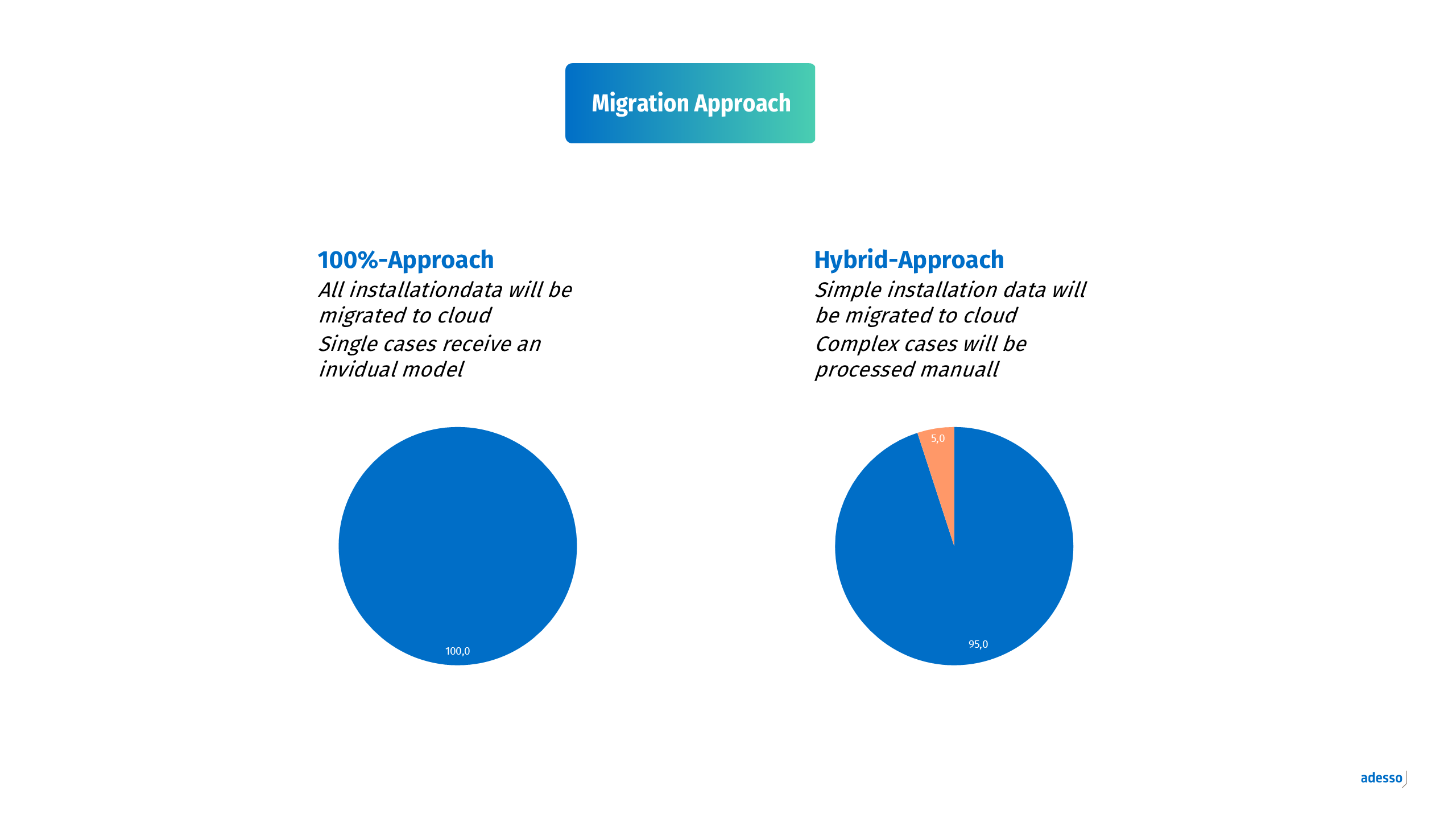
The complexity of the existing metering points is decisive for choosing a suitable migration and operational approach. While the majority can be migrated using a standardized approach, complex special cases require customized solutions. A 100% approach aims to fully map all constructs within the MCM. Alternatively, a hybrid approach can be chosen, in which particularly complex special cases initially remain outside the MCM. Through continuous monitoring, targeted cleansing, and step-by-step harmonization of the master data, the proportion of data within the MCM can be gradually increased.
Conclusion
SAP Metering Concept Management is an essential component of S/4HANA Utilities and supports utility companies on their path toward a more automated and cloud-based system landscape. It creates clear structures for metering concepts, increases the transparency of master data and processes, and enables end-to-end automation across the entire lifecycle of a metering point.
At the same time, it is clear that the introduction of MCM is far more than a technical implementation. It requires organizational change, clear responsibilities, and a coordinated business foundation. If these prerequisites are met, a stable and consistent foundation for sustainable processes within the energy utility is established.
At adesso, we provide comprehensive support throughout your S/4HANA transformation—from business design and technical implementation to migration. We look forward to hearing from you!